
Fairfax · Lorton · Northern Virginia
Water Damage Restoration in Fairfax, VA
Our local water damage restoration professionals remove standing water and dry affected materials in Fairfax, VA. Call and describe the leak, wet flooring or ceiling stain, and arrange a visit to assess the damage.
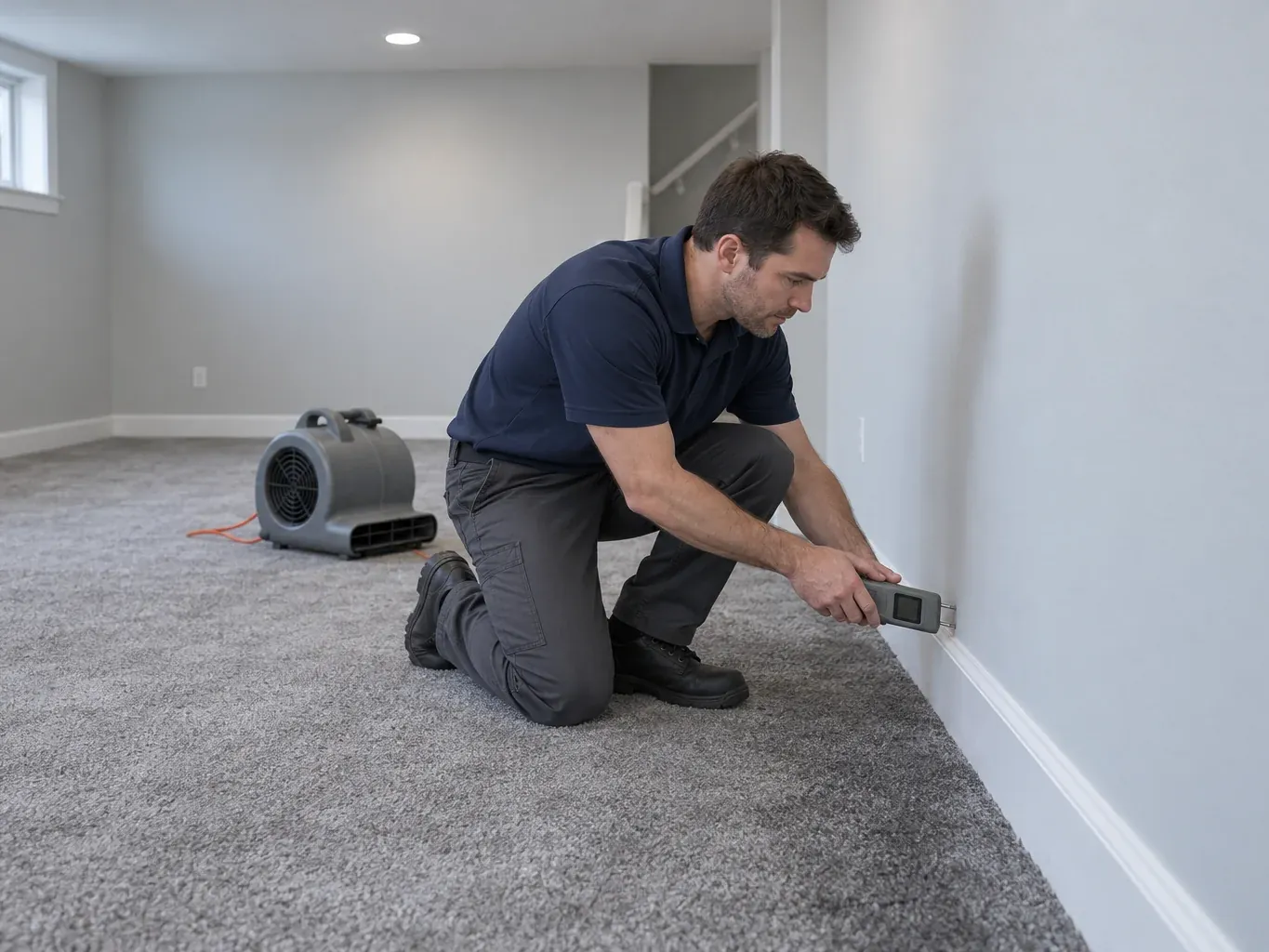
- Calls answered 24/7
- Water removal and drying
- Fairfax, Lorton and nearby
Three Water Damage Myths Worth Correcting
- Myth: A wet-vac finishes the cleanup. Fact: Extracting visible water leaves moisture inside carpet padding, wall cavities and floor layers. Drying needs to address those materials, with moisture readings used to check progress rather than the disappearance of puddles alone.
- Myth: Dry to the touch means dry throughout. Fact: A surface can feel normal while the material underneath remains wet. Your technician checks beyond the exposed face of a wall or floor to identify areas that still need drying.
- Myth: Paint fixes a water stain. Fact: Paint covers the mark without stopping the leak or drying the ceiling. The source and affected materials need attention before the surface is ready for finishing.
Water Damage Services in Fairfax
Water damage can look like one cleanup job. A burst supply pipe, sewage backup and rain-soaked basement need different handling, from water extraction to material removal and controlled drying.
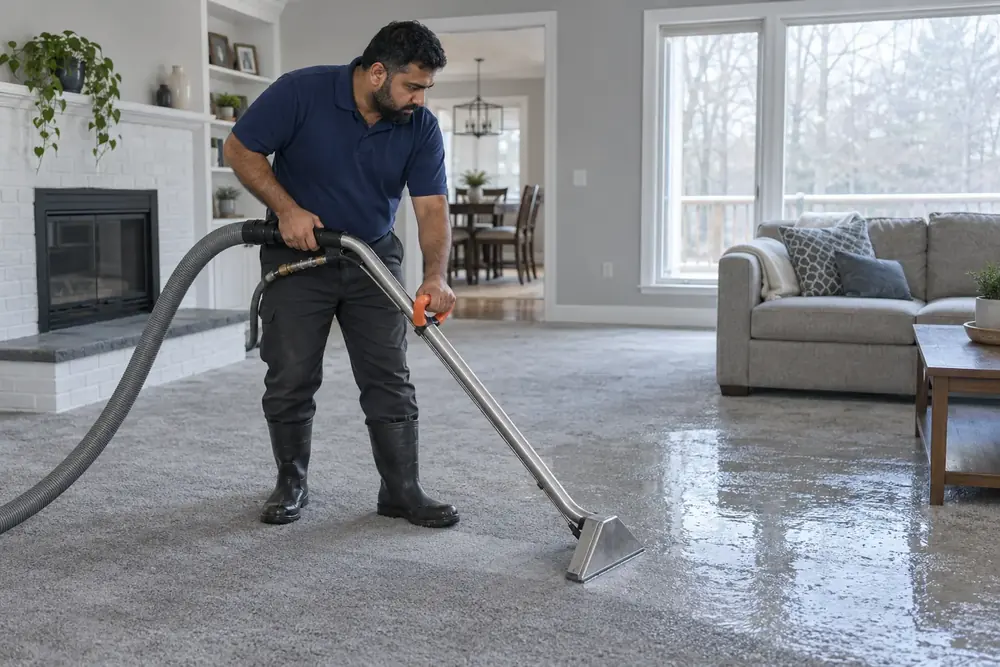 Emergency Water RemovalA water removal emergency involves standing or spreading water that needs extraction, with nearby flooring and walls checked for trapped moisture.
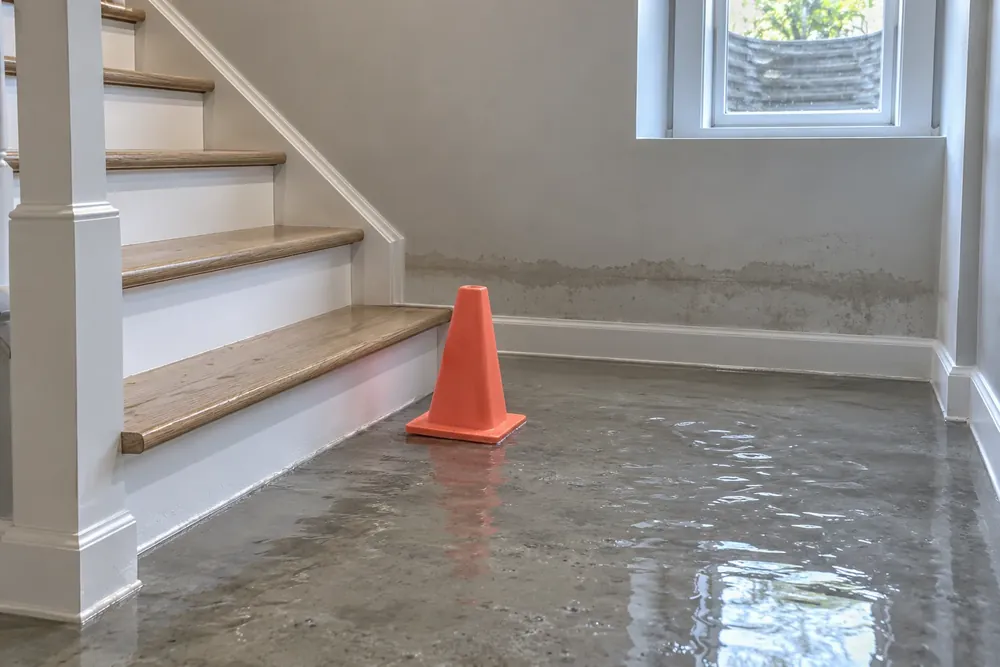 Flood & Basement Water CleanupBasement cleanup addresses standing water, soaked finishes and hidden moisture after flooding, sump pump trouble or water entering below ground.
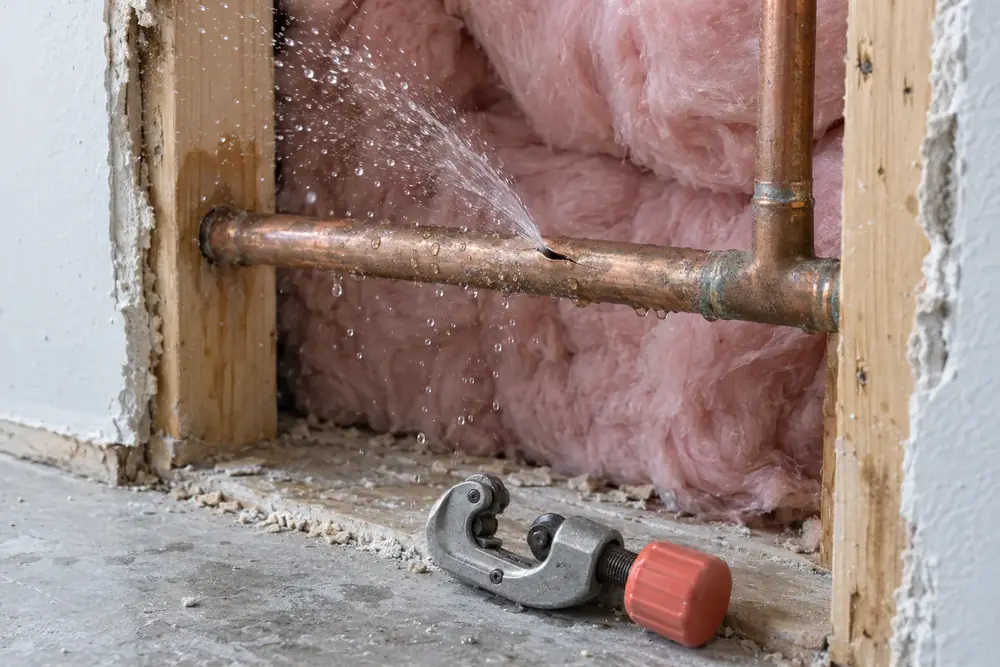 Burst Pipe Water DamageCleanup after a broken pipe reaches wet wall cavities, ceiling materials and flooring that remain soaked after the plumbing repair.
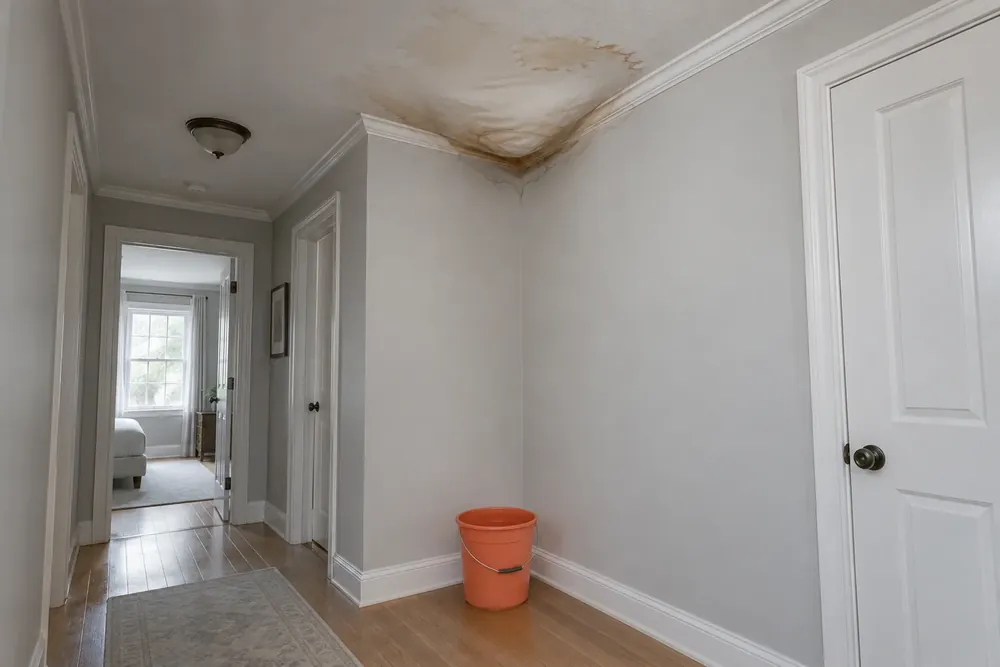 Ceiling Water DamageCeiling stains, active drips, and sagging drywall need moisture checks above the surface before patching and repainting.
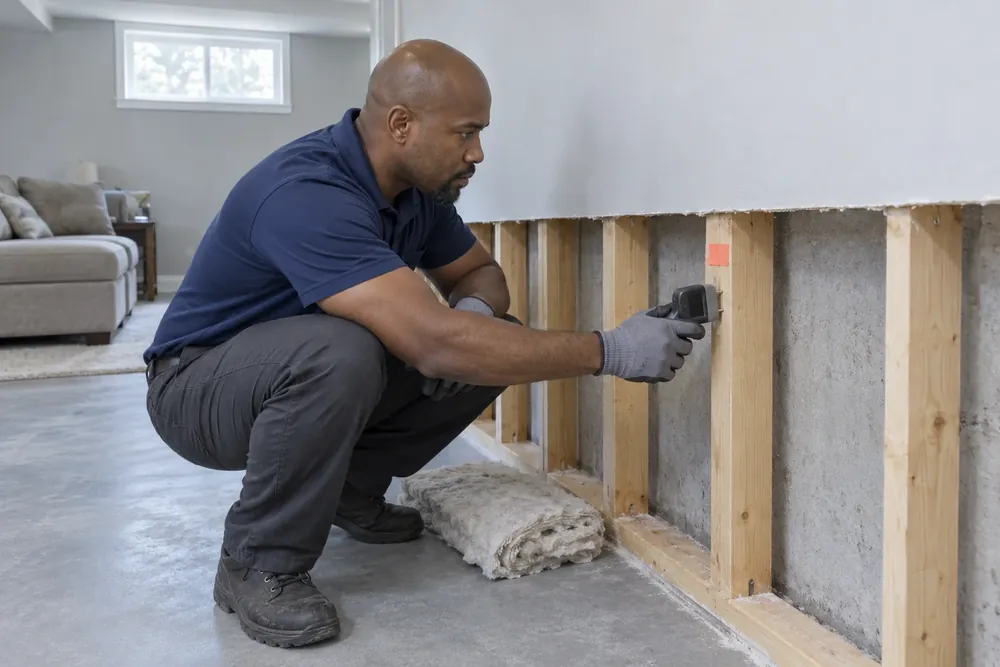 Wall & Drywall Water DamageSoft drywall, swollen seams, and damp baseboards need a wall inspection that checks retained moisture before the surface is closed.
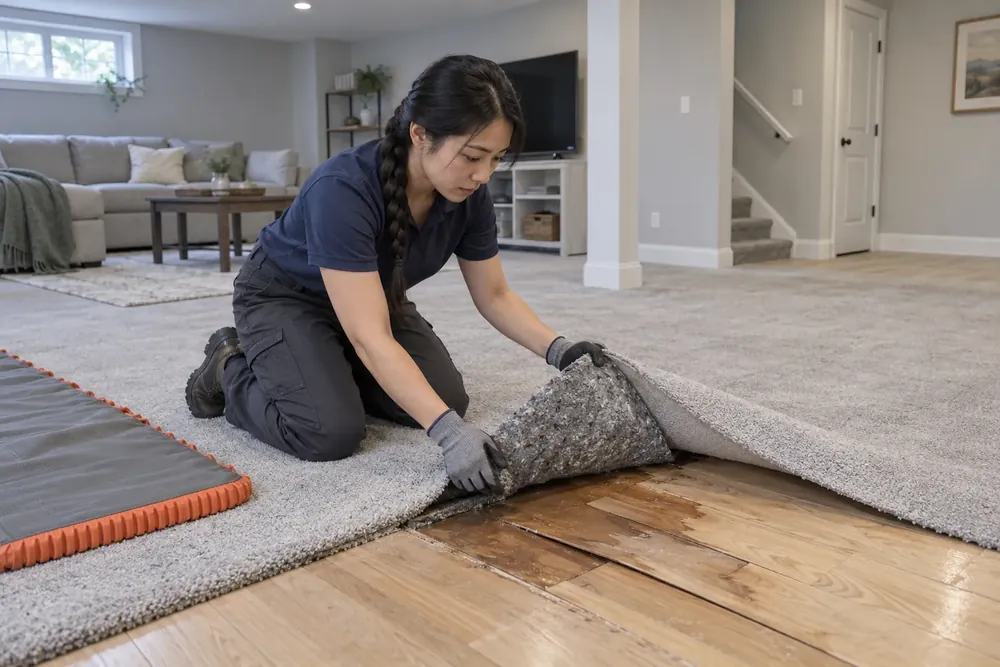 Wet Carpet & Floor Water DamageWet carpet and floor drying addresses soaked padding, cupped boards and moisture trapped beneath flooring after a household leak.
A Call Starts Your Water Damage Assessment
A repaired pipe stops new water, but water absorbed into materials still needs assessment and drying. Stopping the leak leaves the water already inside floors, walls and ceilings to deal with. Homeowners and renters around Fairfax and Lorton can call about an active leak, a flooded room or materials that remain damp after water has been removed. Describe what you see from a safe location, including whether water is still entering and which rooms are affected. You don't need to identify every damaged layer or choose a drying method during the call.
One of our local restoration professionals sets the visit with you and explains the proposed scope and price before work begins. Your technician checks the source, measures moisture and identifies which materials need extraction, drying or removal. The assessment separates the immediate cleanup from repairs to the failed pipe, appliance or roof. Photos, readings and a written scope document the damage and planned work. Call with the information you have now; the inspection establishes the details that aren't visible from the doorway.
From Your Call to Measured Drying
- Call and describe the water you can see from a safe place. Share the affected rooms and whether the leak appears to be continuing.
- Your local restoration professional arranges the visit and discusses the assessment with you. Your technician then checks moisture, access and the condition of affected materials.
- Your technician explains the work and pricing before starting extraction and cleanup. The plan identifies materials to preserve, materials to remove and areas needing drying equipment.
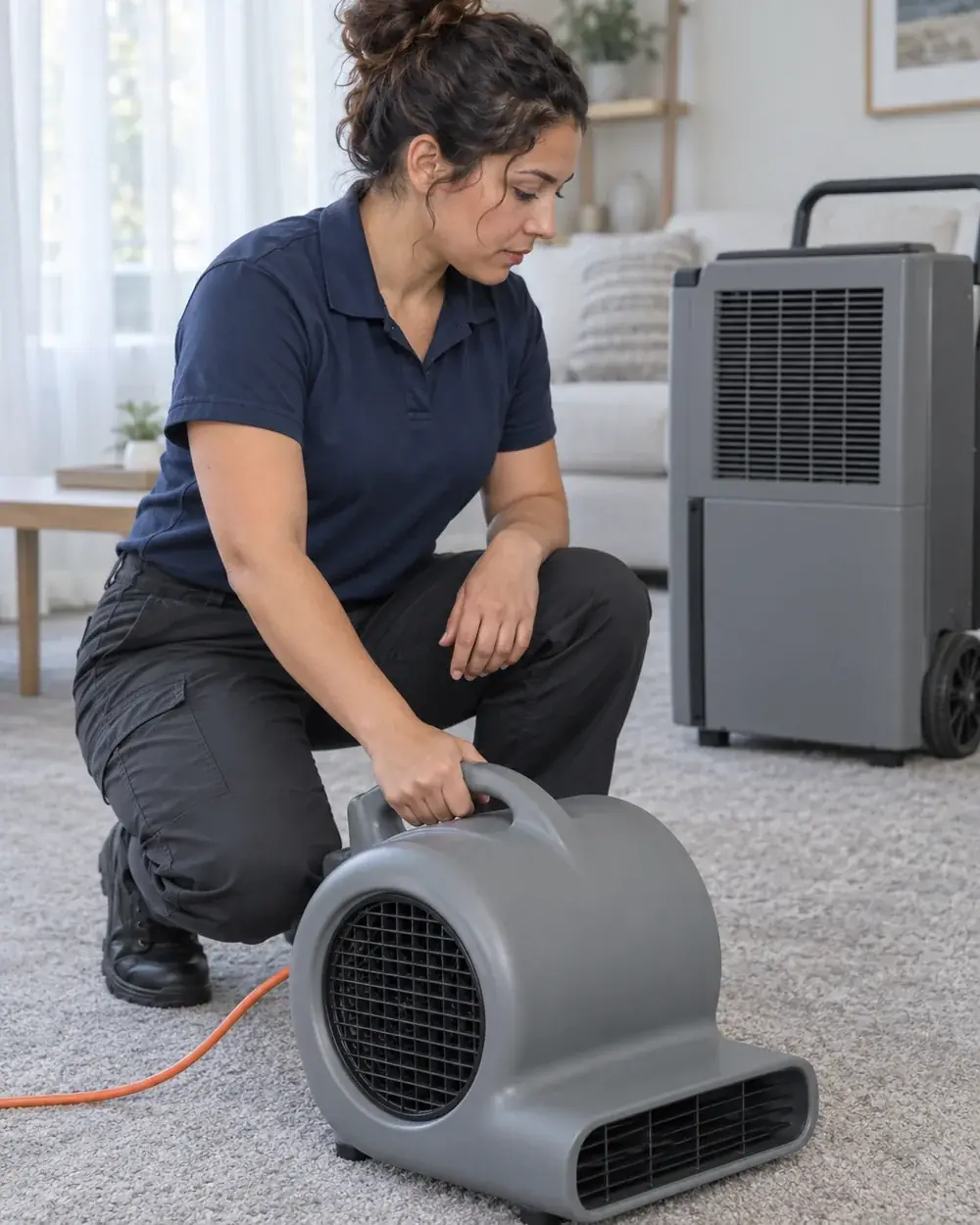
- Drying continues with air movement, dehumidification and repeated moisture checks. Your technician uses those readings to explain when affected materials are ready for the next repair stage.
Water Risks Around Fairfax Homes
Many people assume a small wet patch can wait. Water inside absorbent materials needs prompt attention even when the visible area is modest. EPA guidance recommends drying water-damaged areas and items within 24 to 48 hours to help prevent mold growth; that guidance isn't a promise that every home dries within two days. Early extraction and an inspection help identify moisture beyond the stain.
Fairfax County publishes construction details for finished basements and flood-protection advice for below-ground spaces. In a finished basement, water can reach carpet backing, insulation and enclosed wall edges. The county also warns that heavy rain can cause basement sewer backups in some homes outside mapped floodplains. Its rental housing includes townhomes and condominiums; in attached or stacked housing, describe wet shared walls or ceilings so the inspection follows the affected surfaces. Older supply lines in a house deserve attention when a fitting or pipe leaks, without assuming every older home has failing plumbing.
Heavy rainfall is a documented local concern. The National Weather Service's July 8, 2019 flood summary recorded several inches of rain at locations in Fairfax County, including Vienna and Reston. Call about water entering your home while keeping clear of electrical hazards and unstable ceilings.
Water Damage Help Around Fairfax and Lorton
Water damage restoration help covers Fairfax, Lorton and surrounding communities, including Vienna and Reston, along with Washington DC and Maryland towns such as Silver Spring, Bethesda, Rockville, Potomac and Waldorf. The area spans the I-66 and Route 29 corridors and the I-95 corridor, with I-495 forming the Capital Beltway connection. Whether water is spreading across a lower floor or dripping through an upstairs ceiling, call and describe the affected space and your location.
Browse the service areas for town pages and local details. During your call, share whether the affected space is a house, rental unit or condominium, and describe any access concerns. Your technician uses the inspection to establish where moisture has traveled and how the cleanup should proceed.
Water damage questions answered
What is water damage restoration?
Water damage restoration involves removing water, drying affected materials and addressing damage left by a leak or flood. The work begins with an assessment of the water source and where moisture has traveled. Extraction, controlled drying and removal of unsalvageable materials may be needed before walls, ceilings or floors are ready for repairs.
Can water damage be fixed?
Many water-damaged materials can be dried or repaired, while others need replacement. The outcome depends on the material, the water source, how long it stayed wet and its condition during inspection. A swollen panel and a damp solid wood surface don't necessarily need the same treatment. Call to arrange an assessment of the affected rooms.
Can water damage cause mold?
Water damage can allow mold to grow when materials remain damp. Moisture control and prompt drying help reduce that risk, but a visible stain alone doesn't establish whether mold is present. Describe any damp odor or visible growth during the call, and avoid disturbing affected surfaces. The water damage assessment identifies moisture that needs attention.
Does water damage wood?
Water can swell, warp or stain wood, but wet wood isn't automatically beyond repair. Your technician checks the wood, the layers beneath it and the extent of movement before discussing drying or replacement. Flooring may hold moisture underneath even when its top feels dry, so appearance alone doesn't show whether drying is complete.
Will water damage fix itself?
Water damage doesn't reliably resolve by itself, even when a puddle disappears. Moisture may remain behind baseboards or beneath flooring, and damaged finishes can need repairs after drying. An inspection checks those hidden areas and the source of the leak. Call about lingering dampness, swelling or stains instead of waiting for the room to look normal.
What does water damage mitigation mean?
Water damage mitigation means limiting further damage through actions such as stopping water entry, extracting standing water and drying affected materials. It addresses the immediate moisture problem rather than finishing every repair in the room. Your technician explains which cleanup measures the inspection supports and what separate plumbing, roof or finish repairs remain afterward.
Call now about water in your home and describe the affected rooms so your local restoration professional can arrange the assessment.
Call (703) 544-4750